Unveiling the Future: All the Thrilling Anthropic News You Need to Know!
Unveiling the Future: All the Thrilling Anthropic News You Need to Know!
Estimated reading time: 10 minutes
Key Takeaways
- Anthropic has unveiled its groundbreaking Claude 3 family of
AI models, featuring Opus, Sonnet, and Haiku, each with unique capabilities. - The new
AI modelsintroduce advanced multimodality, enabling them to “see” and understand images alongside text. - Anthropic reaffirms its strong commitment to
AI safetyandresponsible AIthrough methods like Constitutional AI. - Strategic partnerships with tech giants like Amazon and Google are significantly expanding the reach and
AI developmentof Claude. - The Claude 3 launch positions Anthropic as a formidable competitor in the
large language modellandscape, driving innovation across the industry.
Table of contents
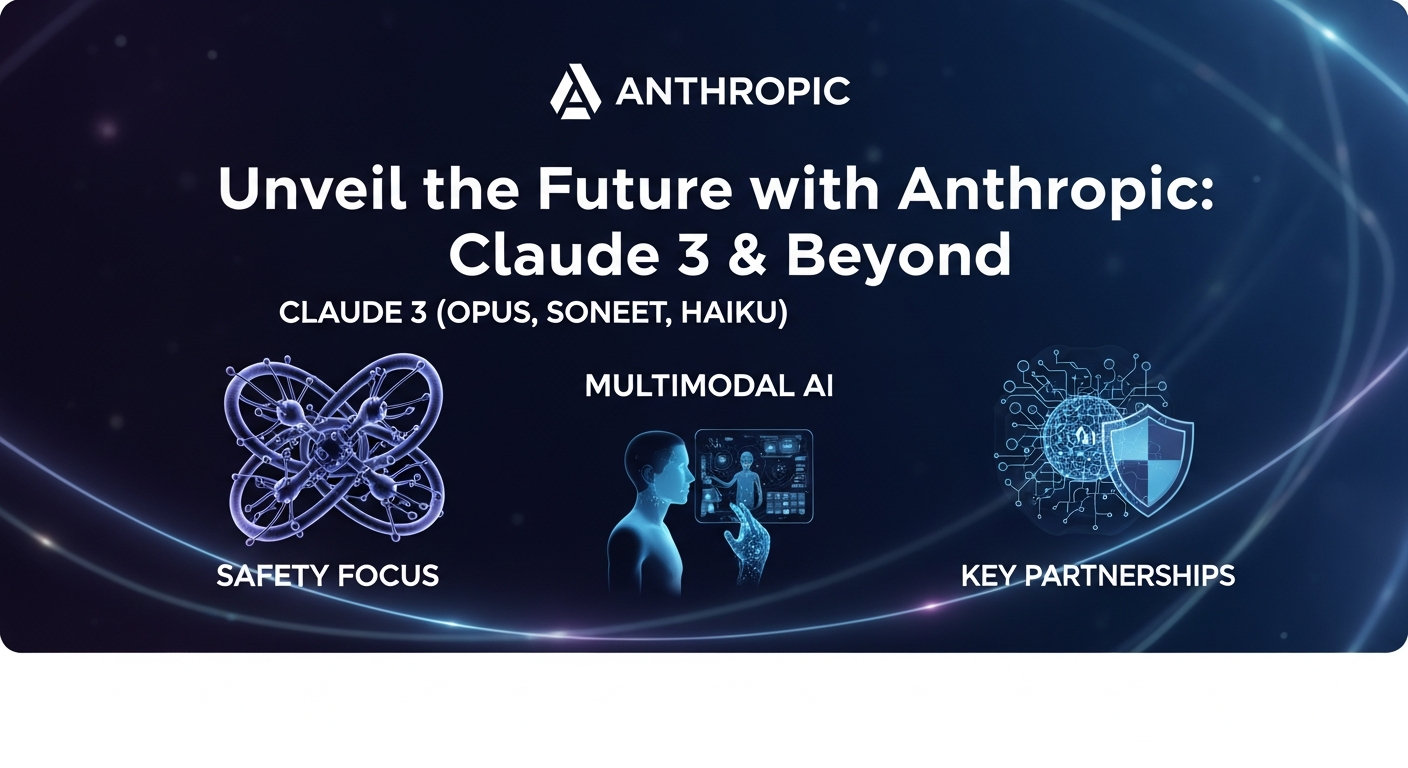
- Meet the Superstars: The Claude 3 Family Takes Center Stage!
- Seeing is Believing: The Magic of Multimodality
- Safety First: Anthropic’s Heartfelt Commitment to Responsible AI
- Powering the Future: Big Partnerships and Investments
- The Race to the Top: Anthropic’s Impact on the AI Landscape
- Looking Ahead: What’s Next for Anthropic and AI?
- Join the Excitement!
- Frequently Asked Questions
Hello, AI Explorers and Future-Thinkers! Get ready to zoom into the exciting world of Anthropic news, because this week, the buzz is louder than ever! Imagine a future where intelligent machines can understand our world, speak our language, and even see what we see, all while being built with safety and kindness at their very core. That future is getting closer every day, and a special company named Anthropic is leading the charge, making big, splashy waves in the vast ocean of Artificial Intelligence.
This isn’t just a small ripple; it’s a giant leap, pushing the boundaries of what AI models can do. We’re talking about advancements so cool, so clever, they feel like something straight out of a science fiction movie, but guess what? It’s all real, and it’s happening right now! So, buckle up, because we’re about to dive deep into the most electrifying Anthropic news that’s got everyone talking, from the brightest scientists to the everyday curious minds.
Anthropic isn’t just another company making smart computers. They are on a grand quest to create large language models that are not only super smart but also super safe. They believe that as AI gets more powerful, it must also be more responsible and trustworthy. Think of it like teaching a super-smart robot everything it needs to know, but also teaching it good manners and how to be a good friend to humans. That’s the heart of Anthropic’s mission, and their latest announcements show just how serious they are about making this dream come true.
What exactly is setting the world on fire? Well, hold onto your hats, because Anthropic recently unveiled something truly monumental: their new family of AI models called Claude 3. Yes, you heard that right, Claude 3! It’s not just one smart brain, but a whole family of brilliant minds, each with its own special powers, designed to make generative AI more helpful, faster, and incredibly insightful. This is the kind of Anthropic news that makes us pinch ourselves to make sure we’re not dreaming!
Meet the Superstars: The Claude 3 Family Takes Center Stage!
The big headline this week, the one that’s sparked excitement across the globe, is the grand arrival of the Claude 3 family. Imagine three brilliant siblings, each with unique talents, working together to push the limits of AI technology. These aren’t just faster versions of old AI models; they are revolutionary. Let’s meet them!
First up, we have Claude 3 Opus. This is the superstar, the brainiac, the absolute champion of the family. Opus is Anthropic’s most intelligent large language model to date. Picture a super-genius who can not only read millions of books in seconds but also understand the deep meaning behind them, solve incredibly tricky puzzles, and even come up with amazing new ideas. Opus is designed for the toughest jobs, like helping scientists discover new medicines, planning super-complex projects, or even figuring out really complicated problems that stump human experts.
What makes Opus so incredibly special? It’s not just its raw brainpower. Opus can understand subtle clues, handle very long conversations, and even explain its thinking process in a clear, easy-to-understand way. This means it’s not just giving answers; it’s helping us understand how it got to those answers, which is super important for complex AI development. Imagine having a super-smart tutor who can explain anything! That’s Claude 3 Opus.
Next, we have Claude 3 Sonnet. Think of Sonnet as the super-efficient, all-rounder hero of the family. Sonnet is incredibly smart, almost as brilliant as Opus, but it’s built to be super fast and efficient, which also makes it more affordable to use. This makes Sonnet perfect for businesses and everyday tasks that need quick, smart answers without breaking the bank.
Imagine you own a big online store, and you have thousands of customers asking questions every minute. Sonnet can read all those questions, understand what each customer needs, and give helpful, kind answers almost instantly. It can also sort through mountains of data, summarize long reports, or help write engaging stories for your website. Sonnet is the go-to AI model for getting things done quickly and smartly, making it a fantastic tool for countless AI applications in the real world. It’s a perfect balance of intelligence and speed, designed to make everyone’s life a little easier and more productive.
And finally, meet Claude 3 Haiku. Don’t let its smaller size fool you; Haiku is the speed demon, the lightning-fast whisperer of the group! Haiku is designed to be the quickest and most compact AI model in the family. It can respond to your questions almost instantly, making it perfect for things that need super-fast reactions.
Think about talking to an AI in real-time, like a super-smart chatbot on a customer service website. Haiku can understand what you’re saying and reply in a blink, making the conversation feel natural and smooth. It’s also great for simple tasks that need quick thinking, like sorting through emails, moderating online chats, or helping little robots understand their surroundings in real-time. Haiku proves that even a smaller AI model can be incredibly powerful when speed is the name of the game. This trio really shows the incredible progress in AI development this week!
Seeing is Believing: The Magic of Multimodality
Now, here’s another piece of mind-blowing Anthropic news: The Claude 3 family isn’t just about reading and writing text anymore. Oh no, they’ve learned a brand-new superpower! They can now see and understand images! This amazing new ability is called multimodality, and it’s a huge step forward for AI technology.
Imagine showing Claude 3 a picture of a funny cat wearing sunglasses. Before, it could only understand if you described the cat in words. Now, you can actually upload the picture, and Claude 3 can tell you, “Oh, that’s a cat wearing sunglasses! It looks quite stylish!” But it’s not just about funny pictures. This has incredibly useful AI applications.
Think about this:
- Analyzing Charts and Graphs: Show Claude 3 a complex chart filled with numbers and lines, and it can understand what the chart is showing, explain the trends, and even tell you important things it learns from the data. This is super helpful for businesses, scientists, and anyone who works with data.
- Understanding Documents: Imagine scanning a document with pictures, diagrams, and text. Claude 3 can now read everything, seeing both the words and the images, to give you a complete understanding of the document’s meaning. No more missing out on information just because it’s in a picture!
- Helping People with Vision Challenges: This technology can describe what’s in a photo, helping people who can’t see clearly to understand their surroundings or what an image represents. It’s a truly compassionate use of
AI models. - Interpreting Medical Scans: In the future, highly advanced versions of these
AI modelscould potentially help doctors analyze X-rays or MRI scans, noticing things that human eyes might miss. This is still a dream, but multimodality is the first exciting step towards such possibilities!
This ability to “see” the world like we do opens up a whole new universe of possibilities for generative AI. It means AI models can interact with our world in richer, more meaningful ways, making them even more helpful and integrated into our daily lives. This is groundbreaking AI development that will change how we interact with technology forever!
Safety First: Anthropic’s Heartfelt Commitment to Responsible AI
While all these new superpowers are incredibly exciting, Anthropic never forgets its core mission: building AI models that are not just smart, but also safe and responsible. This is probably the most important part of Anthropic news every single time. They call it their commitment to AI safety and responsible AI.
Think about it this way: if you build a super powerful car, you also need to make sure it has super good brakes, airbags, and a careful driver. Anthropic thinks the same way about AI technology. As their large language models become more intelligent and capable, they also need to be built with strong safeguards to ensure they are helpful and don’t cause harm.
Anthropic has a special way of training their AI models called “Constitutional AI.” It’s a bit like giving the AI a set of moral rules or a constitution to follow. Instead of just learning from what humans tell it is right or wrong, the AI learns these principles directly. This helps the AI models to be more independent in their ethical reasoning, making them less likely to say things that are biased, harmful, or untrue.
This focus on AI safety is what sets Anthropic apart. They are not just racing to make the smartest AI; they are racing to make the *safest* and most beneficial AI for humanity. They have dedicated teams of scientists working tirelessly on understanding the risks of advanced AI models and finding ways to prevent them. This includes research into:
- Bias detection: Making sure the AI doesn’t unfairly favor one group over another.
- Factuality: Ensuring the AI provides accurate and truthful information.
- Harm prevention: Designing the AI to avoid generating harmful content or instructions.
- Transparency: Helping us understand how the AI makes its decisions.
Their commitment to responsible AI means they are always thinking ahead, imagining what challenges might arise as AI technology grows, and building solutions into their AI development process from the very beginning. This isn’t just a nice-to-have; it’s a fundamental part of who Anthropic is, and it’s a crucial part of making sure that generative AI truly serves humanity.
Powering the Future: Big Partnerships and Investments
Another exciting part of Anthropic news is how they are teaming up with other big players in the tech world to bring their amazing AI models to more people. You can’t build the future alone, and Anthropic knows that strong partnerships are key to making their AI technology widely available and incredibly useful.
One of their biggest partners is Amazon. Yes, the same Amazon that delivers packages to your door! Amazon has made a huge investment in Anthropic, showing just how much they believe in Anthropic’s vision and their powerful Claude AI models. This partnership means a few super important things:
- Cloud Power: Anthropic uses Amazon Web Services (AWS) as its main cloud computing provider. Imagine AWS as a giant, super-powerful computer brain in the sky. This helps Anthropic train their
large language modelsand make them even smarter and more capable. - Wider Reach: Claude
AI modelsare being integrated into Amazon’sAI applicationsand services, like Amazon Bedrock. This means more businesses and developers can easily access and use Claude’s intelligence to build their own amazinggenerative AIproducts. Think of it as making it super easy for anyone to plug Claude’s brain into their own creations!
But Amazon isn’t their only friend in the tech world. Anthropic also continues its strong partnership with Google. Google has also invested in Anthropic and provides access to its special computer chips called TPUs (Tensor Processing Units). These TPUs are super-fast processors designed specifically for machine learning and deep learning tasks, which are essential for training neural networks like Claude.
These partnerships are not just about money; they are about sharing resources, expertise, and a vision for the future of AI. They help Anthropic scale up their AI development, meaning they can build bigger, better, and more powerful AI models faster. This ultimately means more people around the world will benefit from Anthropic’s innovative AI technology and their commitment to responsible AI.
The Race to the Top: Anthropic’s Impact on the AI Landscape
The arrival of Claude 3 has truly shaken up the world of large language models and generative AI. It’s like a new champion has entered the ring, and everyone is watching! This kind of competition is actually great news for all of us, because it pushes every company to innovate faster and create even better AI models.
Anthropic is now a very strong competitor to other leading AI development companies, especially those who make popular AI models like GPT. The race to build the best AI technology is intense, but Anthropic’s unique focus on AI safety and responsible AI gives it a special place in this competition. They are proving that you can be incredibly innovative and powerful while still putting ethics and safety first.
This intense drive to innovate means that we, the users, will get to experience even more amazing AI applications in the future. Imagine AI models that can write entire novels, design incredible new products, help us learn new languages faster, or even assist in scientific breakthroughs that cure diseases. This is the exciting promise that Anthropic news brings to the table this week!
Every new advancement from Anthropic, especially with the Claude 3 family, contributes to the overall progress of machine learning and deep learning. Their research helps the entire AI community understand how to build more capable and safer neural networks. It’s a thrilling time to be alive, witnessing these giant leaps in AI technology.
Looking Ahead: What’s Next for Anthropic and AI?
So, what does all this incredible Anthropic news mean for the future? Well, it means the journey has just begun! Anthropic is not resting on its laurels. They are constantly pushing forward, exploring new frontiers in AI development. We can expect to see even more powerful versions of Claude in the future, with even more amazing capabilities.
Imagine AI models that can not only understand images but also videos, sounds, and even touch. Imagine them becoming even better at creative tasks, helping artists, musicians, and writers reach new heights. And always, Anthropic’s guiding star will be AI safety and responsible AI, ensuring that these powerful tools are used for good.
Their ongoing research into how neural networks work, how to make them safer, and how to align them with human values is crucial. They are not just building tools; they are building the very foundations for a future where AI technology can truly enhance human lives in countless positive ways. This isn’t just about faster computers; it’s about a smarter, safer, and more helpful future for everyone.
The impact of generative AI is just starting to be felt across every industry, from healthcare and education to entertainment and manufacturing. Anthropic’s contributions are shaping this future, making sure that as AI applications grow, they do so in a way that benefits all of us.
Join the Excitement!
This week’s Anthropic news is a powerful reminder that we are living through an incredible moment in history. The advancements in AI models, the commitment to responsible AI, and the vision for a brighter future are truly inspiring. Anthropic is not just building intelligent machines; they are helping to build a more intelligent and ethical future for everyone.
What part of this Anthropic news excites you the most? Share your thoughts and let’s keep exploring the wonders of Artificial Intelligence together! If you’re eager to experience these advancements firsthand, Sign up on Anthropic to get started with Claude. The future is bright, and it’s powered by incredible AI technology like what Anthropic is creating.
Frequently Asked Questions
Q: What is the Claude 3 family?
A: The Claude 3 family consists of Anthropic’s latest generation of AI models: Opus (the most intelligent), Sonnet (the efficient all-rounder), and Haiku (the fastest and most compact). Each is designed for different performance needs while pushing the boundaries of generative AI.
Q: What is multimodality in Claude 3?
A: Multimodality refers to Claude 3’s new ability to *understand and process information from both text and images*. This allows it to analyze charts, understand documents with visuals, and even help describe images for users, opening up a wide range of new AI applications.
Q: How does Anthropic ensure AI safety and responsibility?
A: Anthropic is deeply committed to AI safety and responsible AI. They use a unique training method called “Constitutional AI,” which provides AI models with ethical guidelines directly, making them more independent in their ethical reasoning and less prone to generating harmful content.
Q: Who are Anthropic’s major partners?
A: Anthropic has significant partnerships with major tech companies like Amazon and Google. These collaborations provide computing resources (AWS and Google TPUs) and integration into broader services (like Amazon Bedrock), helping to scale Anthropic’s AI development and reach a wider audience.