Google AI News: A Thrilling Peek into the Future of How We Learn, Search, and Explore!
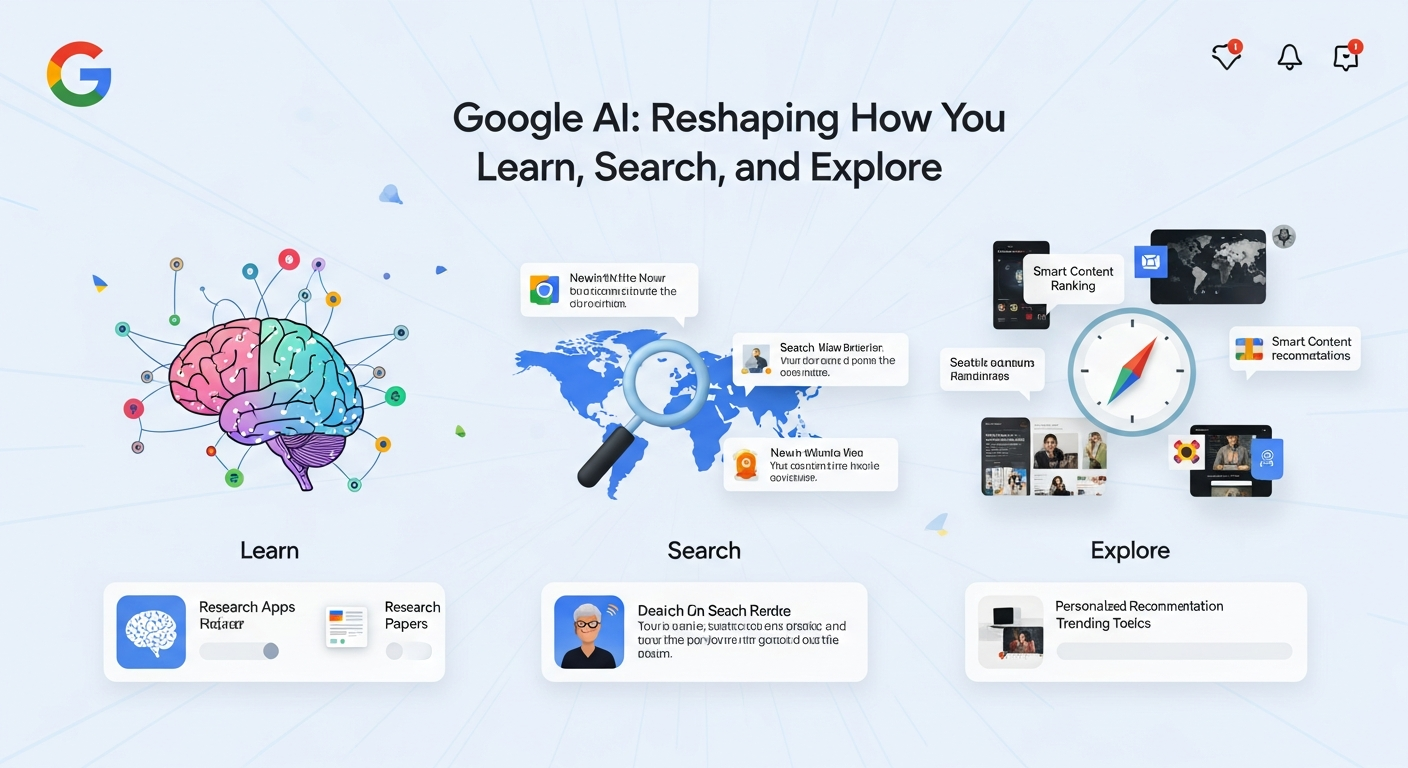
Google AI News: A Thrilling Peek into the Future of How We Learn, Search, and Explore!
Estimated reading time: 8 minutes
Key Takeaways
- Google is deeply integrating AI into everyday products, beginning with features in Google News.
- New **AI-generated article overviews** and summaries are being tested to help users quickly grasp news content.
- Google is fostering **AI partnership programs** with news publishers to create helpful, clearly labeled AI snippets.
- The company is significantly boosting its AI infrastructure with the appointment of **Amin Vahdat** as Chief Technologist for AI Infrastructure.
- Google’s “Helpful Content” update for Search prioritizes **genuinely useful and satisfying content**, irrespective of whether AI was used in its creation.
- The overall strategy focuses on product-level AI integration, strong publisher partnerships, and massively scaled, specialized AI infrastructure.
Table of contents
- Google AI News: A Thrilling Peek into the Future of How We Learn, Search, and Explore!
- Key Takeaways
- Unlocking the News: How Google AI is Changing the Way You Read!
- The Brain Behind the Brawn: Boosting Google’s AI Powerhouse!
- Smart Search, Smarter Content: What Google Wants You to See!
- The Big Picture: What All This Google AI News Means for Our Future!
- Frequently Asked Questions
Get ready for some truly astounding news from the world of Google and its amazing artificial intelligence! This week, the air is buzzing with **Google AI news** that feels like something straight out of a futuristic movie. Google isn’t just dreaming about the future; they’re building it, right now, with incredible changes that will make the internet smarter, faster, and even more helpful for everyone. We’re going to dive deep into how Google is making big moves in how you discover stories, how they build their super-smart AI brains, and even how they decide what information is most important online. It’s a journey filled with curiosity, excitement, and a thrill for what’s coming next!
Imagine a world where finding the best information online is easier than ever, where powerful computers learn and grow faster, and where every piece of news feels tailor-made to help you understand the world. That’s the vision Google is bringing to life with its latest AI breakthroughs. From helping you quickly grasp the main points of a news story to making sure only the most helpful information rises to the top of your searches, Google is working tirelessly behind the scenes. And guess what? We’re here to pull back the curtain and show you exactly what’s happening, and why it’s so incredibly exciting!
Unlocking the News: How Google AI is Changing the Way You Read!
Have you ever clicked on a news story, only to realize after a few sentences that it wasn’t quite what you were looking for? Or maybe you just need the main idea of a big, long article really quickly? Google heard you! One of the most electrifying pieces of **Google AI news** this week is about how they’re using AI to transform Google News, the place many of us go to find out what’s happening around the globe.
Google is currently doing a super cool test: they’re trying out **AI-generated article overviews** right on some news publishers’ pages inside Google News. Think of it like a super-smart robot brain reading a whole news story in a blink and then writing a short, easy-to-understand summary of it. This summary appears right above the actual article. It’s labeled clearly, so you’ll always know it was written by AI, not the original reporter. It’s like having a helpful friend tell you the key points of a long book before you even start reading it!
Why is Google doing this? Well, they want to help you decide faster if an article is exactly what you want to read. In our busy world, time is precious. These AI summaries are designed to give you the gist, the main scoop, so you can quickly understand if you want to click through and dive deep into the full story. It’s part of a bigger plan to weave generative AI – that’s AI that can create new things like text into all sorts of news products that people use every day. Imagine how much faster you’ll be able to stay informed about your favorite topics, from exciting new animal discoveries to the latest space missions!
But wait, there’s more to this story! Google isn’t just doing this on their own. They’re also launching something called an **AI partnership program with news publishers**. This means they’re working hand-in-hand with the very people who write and publish the news. It’s like Google is inviting the news creators to sit at the same table and figure out the best ways to use AI together.
In this special program, Google is experimenting with different kinds of AI-generated helpful snippets that can go right alongside a publisher’s content. We’re talking about things like **news briefs**, which are super short summaries, **key points**, which highlight the most important parts, and **explainers**, which can break down tricky topics into simple words. Just like with the article overviews, Google is making sure these are always clearly marked as AI-created. They want to be super transparent, so you always know what you’re reading and who created it.
This partnership is all about supporting what Google calls the “open web.” This means making sure that websites and news sources of all kinds can thrive and reach more readers. By using Google’s powerful AI, they hope to make it easier for you to discover great content and understand it better. It’s a huge step forward in making sure that as AI gets smarter, it also helps real human journalists and news organizations share their important stories with the world. Think of it as a bridge, built by AI, connecting you even more directly to the news you need and want. The excitement around these features is truly palpable, showing a future where information is not just abundant, but also immediately understandable and accessible!
The Brain Behind the Brawn: Boosting Google’s AI Powerhouse!
Now, let’s switch gears and go behind the scenes, deep into the beating heart of Google’s technology. If you think of Google’s amazing AI as a super-smart brain, then it needs a super-powerful body to work! This week’s **Google AI news** also brings us a thrilling story about how Google is making its AI even stronger and faster from the inside out.
The world of AI is like a giant race, with many companies trying to build the smartest and most powerful artificial brains. This is often called the “generative AI arms race” because everyone is trying to create AI that can generate incredible new things, from stories and poems to amazing pictures and helpful computer code. To stay at the very front of this exciting race, Google has made a super important move. They’ve promoted a brilliant engineer named **Amin Vahdat** to a brand new, very important job: **Chief Technologist for AI Infrastructure**.
Imagine building a city from scratch. You need strong roads, powerful electricity, and super-fast communication lines for everything to work. Amin Vahdat is like the chief architect for Google’s AI city. For a long time, he’s been a leader behind Google’s data centers (which are like huge warehouses filled with supercomputers) and their networking technology (which is how all these computers talk to each other super fast). Now, in his new role, he’s going to be in charge of making sure Google builds and scales the strongest, fastest computing backbone for all their massive AI models, like their super-smart Gemini AI.
This is a big deal! Think about it: powerful AI models, like Gemini, need an incredible amount of computer power to learn and do amazing things. They need special computer chips that are designed just for AI, and huge data centers that can keep all those chips running efficiently. Amin Vahdat’s job is to make sure Google has the very best of these, so their AI can keep getting smarter, faster, and more capable than anyone else’s.
Why is this so exciting? Because it shows Google is really serious about being the best in AI. They’re not just creating cool new AI features for us to use; they’re also investing heavily in the very foundations that make those features possible. By doubling down on custom chips, making their data centers super efficient, and building enormous training systems, Google is setting itself up for incredible breakthroughs. Vahdat has already been a huge part of creating things like TPUs (Tensor Processing Units), which are special chips Google designed just for AI, and the super-fast networks that connect them all. This leadership shift is a clear signal that Google is revving its engines, preparing for even more astonishing AI innovations in the years to come. It’s like watching a champion athlete train for the biggest competition – every move is strategic, every muscle is strengthened, and the goal is nothing less than victory! The future of Google’s AI, with Vahdat at the helm of its infrastructure, promises thrilling advancements that will touch every corner of our digital lives.
Smart Search, Smarter Content: What Google Wants You to See!
Now, let’s talk about something that almost all of us use every single day: Google Search! When you type something into Google, you expect to find the best, most helpful answers. And Google is working super hard to make sure that’s exactly what you get. This brings us to another fascinating piece of **Google AI news** from this week: how their search system is getting even smarter, especially when it comes to figuring out what content is truly helpful.
Around December, Google rolled out an important update to its Search ranking systems, called the **”Helpful Content” update**. Imagine Google’s search engine as a giant librarian who wants to make sure only the best, most useful books are on the top shelves. This update was designed to help that librarian get even better at finding and gently pushing down pages that aren’t very valuable. This includes many articles that might have been written by AI or “spun” from other articles without adding anything new or truly helpful.
What did this update really do? Well, clever people who study how Google Search works noticed some interesting things. Websites that had lots of people clicking on them, but then those people quickly left the page (this is called a “fast bounce”) or didn’t stay long, were hit the hardest. This tells us that Google is getting much smarter at figuring out if a website only looks good from its short description in the search results but doesn’t actually deliver helpful information once you click on it. It’s like opening a brightly wrapped present, only to find nothing inside! Google wants to stop that disappointment.
Now, here’s a super important point: this update **does not explicitly punish AI content just because it’s made by AI**. This is a common misunderstanding! Google isn’t saying, “No AI content allowed!” Instead, they are saying, “Is this content actually useful and satisfying for people?”
Think about it this way: if a website uses AI to help draft an article, but then real human experts jump in, add their own special knowledge, edit it carefully, and make it deep and interesting, those websites generally did fine or even improved! It’s like using a robot to help you draw the outlines of a picture, but then a talented artist comes along and adds all the beautiful colors, details, and their own special touch. The final result is amazing and truly helpful.
The main idea, the **core signal**, behind this “Helpful Content” update is whether the content is **genuinely useful and satisfying** for the person reading it. It doesn’t really matter how it was created, whether AI was involved or not. What matters is the end result: does it answer your questions, teach you something new, or give you the information you truly need? Google wants to make sure that when you search, you always find content that genuinely helps you, makes you happy, and doesn’t waste your time. This means a more trustworthy and efficient internet for all of us, where quality and genuine help are always king. It’s a thrilling development for anyone who uses the internet to learn and explore, promising a future where finding reliable information is simpler and more rewarding than ever!
The Big Picture: What All This Google AI News Means for Our Future!
So, we’ve explored some truly fascinating corners of Google’s world this week, filled with incredible **Google AI news**. From how you’ll read the news to how Google powers its super-smart brains and even how it decides what you see in your search results, Google is making waves that will change our digital lives forever. Let’s put all these exciting pieces together to see the big picture.
First, Google is clearly focused on **product-level AI integration**. This is a fancy way of saying they’re weaving AI directly into the tools and apps you use every day. We saw this with the AI article overviews and summaries in Google News and how AI is starting to help in Search. Imagine more and more of your favorite Google products becoming smarter and more helpful, almost magically anticipating what you need. It’s like your phone or computer will have a little genius helper living inside it, ready to make things easier!
Second, Google is putting a lot of effort into **publisher partnerships**. They understand that as AI gets better at summarizing and creating content, they need to work closely with the people who create the original news stories. By inviting publishers to join their experiments and by clearly labeling anything made by AI, Google is trying to build trust and make sure that AI helps, rather than harms, the flow of good information. This is super important for making sure our internet stays rich with diverse voices and original content. It’s a cooperative spirit that promises a stronger, more connected online world for everyone.
And finally, Google is making massive moves to **scale up and specialize its infrastructure**. By promoting brilliant engineers like Amin Vahdat and investing heavily in custom computer chips and huge data centers, Google is making sure it has the ultimate power and brain strength to keep leading the AI race. This means that the AI models they create will continue to get more powerful, more accurate, and capable of solving even bigger challenges. This internal strengthening is the secret sauce that will fuel all the amazing AI features we’ll see in the future, from smarter virtual assistants to groundbreaking scientific discoveries powered by AI.
These changes are not just small tweaks; they are huge, bold steps forward in the world of artificial intelligence. Google is showing us a future where AI isn’t just a cool idea, but a powerful, helpful tool that is deeply integrated into everything we do online. It’s a future where information is more accessible, where you can understand complex topics faster, and where the internet is even more helpful and trustworthy. To experience these advancements firsthand, Create your account in Google.
The journey ahead is full of wonder and discovery, and Google is at the very forefront, pushing the boundaries of what’s possible. The **Google AI news** this week paints a picture of a company not just reacting to the future, but actively building it, piece by exciting piece. For more on the broader AI landscape and Google’s role in the latest breakthroughs, see our latest updates on https://aidevelopers.in/ai-news-today-breakthroughs. So, buckle up, because the world of AI is moving at lightning speed, and with Google leading the way, we’re all in for a thrilling ride into an incredibly smart future!
Frequently Asked Questions
- What new AI features are being introduced in Google News?
Google is testing AI-generated article overviews and summaries directly on news publishers’ pages within Google News. These aim to give users a quick understanding of an article’s main points before diving into the full content.
- How is Google partnering with news publishers regarding AI?
Google has launched an AI partnership program to work hand-in-hand with news publishers. They are experimenting with AI-generated snippets like news briefs, key points, and explainers that accompany a publisher’s content, all clearly marked as AI-created.
- Who is Amin Vahdat and what is the significance of his new role?
Amin Vahdat has been promoted to Chief Technologist for AI Infrastructure. In this critical role, he oversees the development and scaling of Google’s powerful computing backbone, including custom AI chips and data centers, to support and advance massive AI models like Gemini.
- What is the “Helpful Content” update in Google Search, and how does it affect AI content?
The “Helpful Content” update focuses on promoting content that is genuinely useful and satisfying for users. It does not explicitly penalize content solely because it’s AI-generated, but rather prioritizes quality and helpfulness, regardless of the creation method. Content enhanced by human expertise after AI drafting can perform well.
- What is Google’s overarching strategy for AI development?
Google’s strategy involves three main pillars: product-level AI integration (weaving AI into everyday tools), robust publisher partnerships (collaborating with content creators), and scaling specialized infrastructure (investing in advanced chips and data centers to fuel AI advancements).